
❁
2023
❁
e-commerce project
❁
2023
❁
e-commerce project
❁
2023
❁
e-commerce project
❁
2023
❁
e-commerce project
❁
2023
❁
e-commerce project
ABOUT THE CLIENT
Telecom Argentina is a leading telecom company in the country, offering mobile, internet, TV, and cloud services. Its ecommerce platform provides a seamless way for users to purchase devices, accessories, and service bundles with flexible payments and exclusive online offers.
Company size
21000 employees
Industry
Ecommerce - Telco
FIRST, THE PROBLEM
WHAT WE HAD?
The card had issues and didn't adapt well to changes, for examplo we couldn't test improvements like product scarcity for boosting sales. Also, the design remained unchanged for a long time, and the "Precio especial" (special price) was added later.
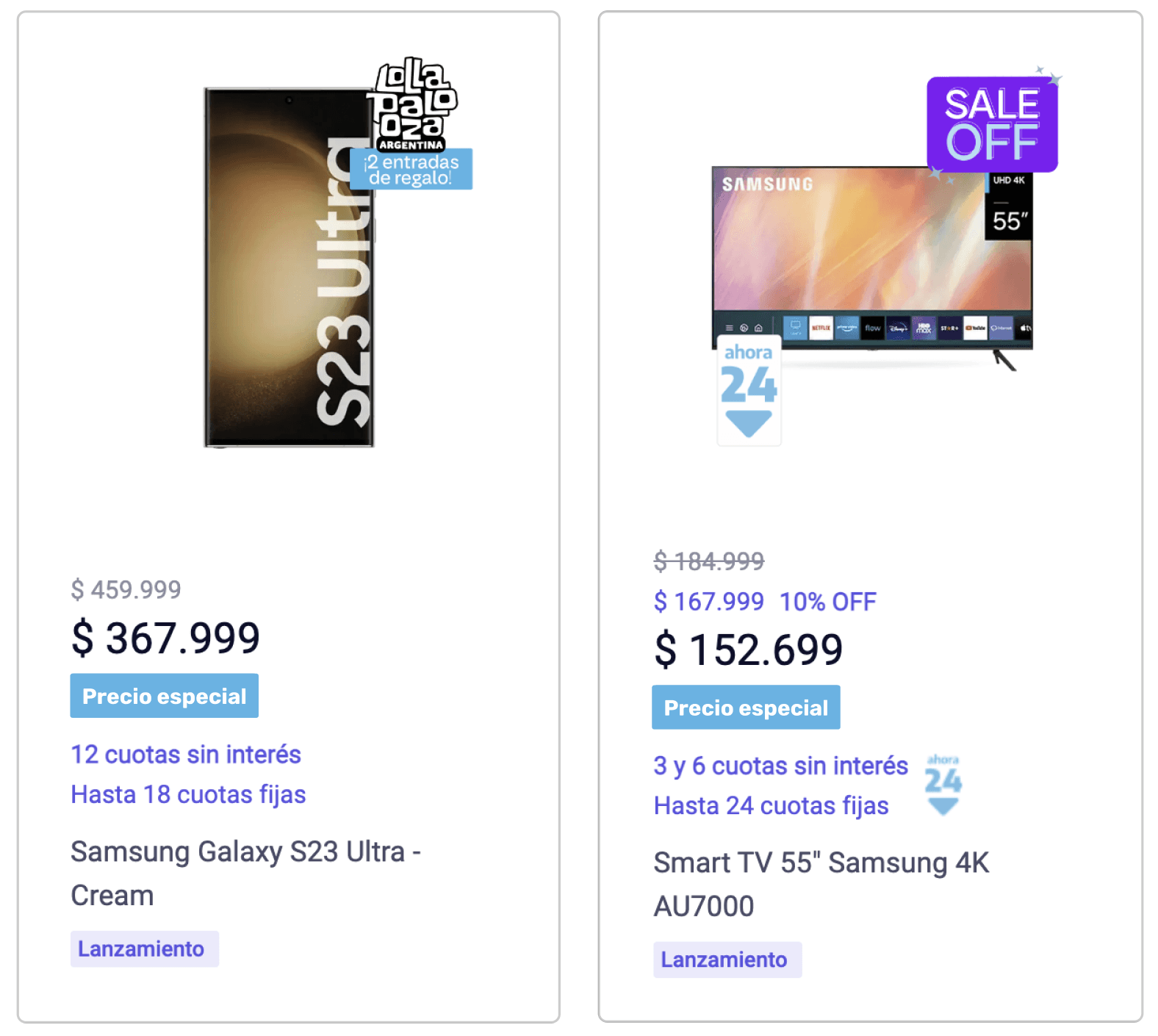
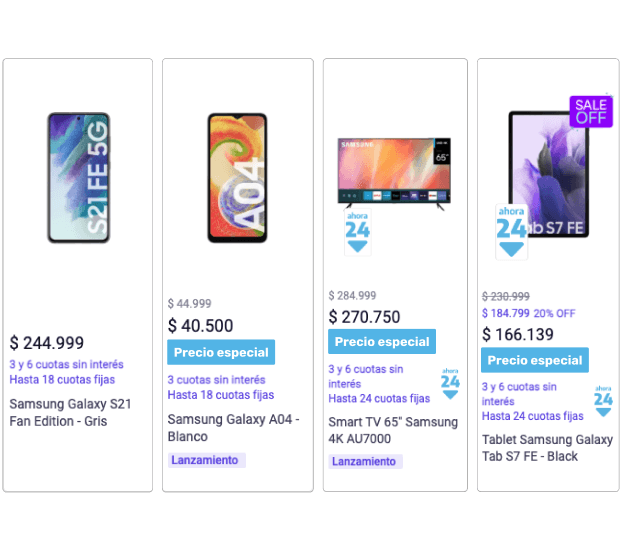
In this e-commerce, they aim to foster customer loyalty among multi-service customers by offering a "precio especial" (special price). And this, having up to 3 prices for a product, was the biggest problem we had
"3 out of every 10 people complained in the NPS survey that the price they were charged was not the one they were entitled to."
I looked into e-commerce sites nationally and internationally to see how they displayed products and understood positioning logic. We considered "progressive disclosure" to gradually reveal products instead of showing everything at once.
For design, we took mobile measurements as the primary reference since we needed to fit the cards in a small space. Additionally, mobile accounted for 84% of the web traffic at that time.
Allow more text
The accompanying items are not noticeable due to their size.
Images appear too small.
Larger images, the product stands out
Increased visual presence.
Long scroll
Doesn't allow showcasing as many products, and navigation isn't easy.
It's similar to what we have today.
Allows displaying more cards, hence more products.
The cards take up space in pixels from the sides due to their size; this could be avoided.
🧐
And... what would happen if we stop using cards?
FIRST EXPLORATIONS
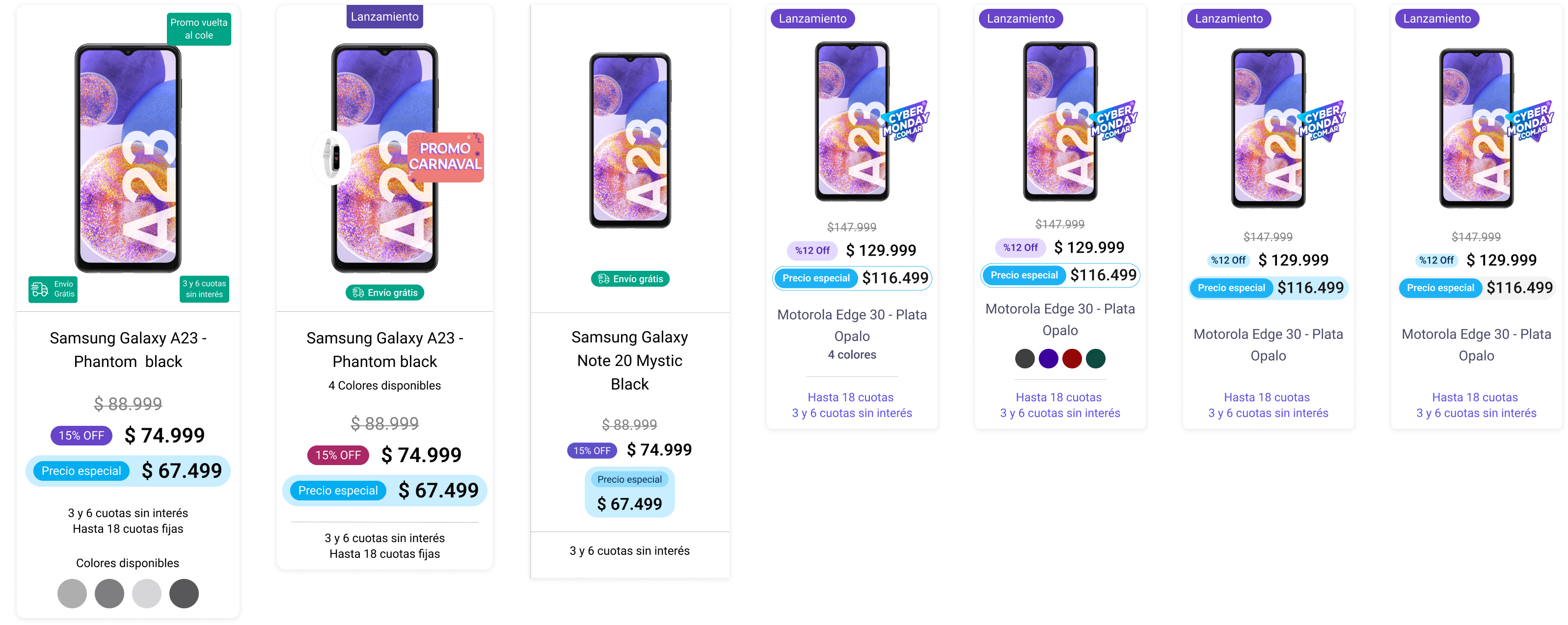
INITIAL TEST
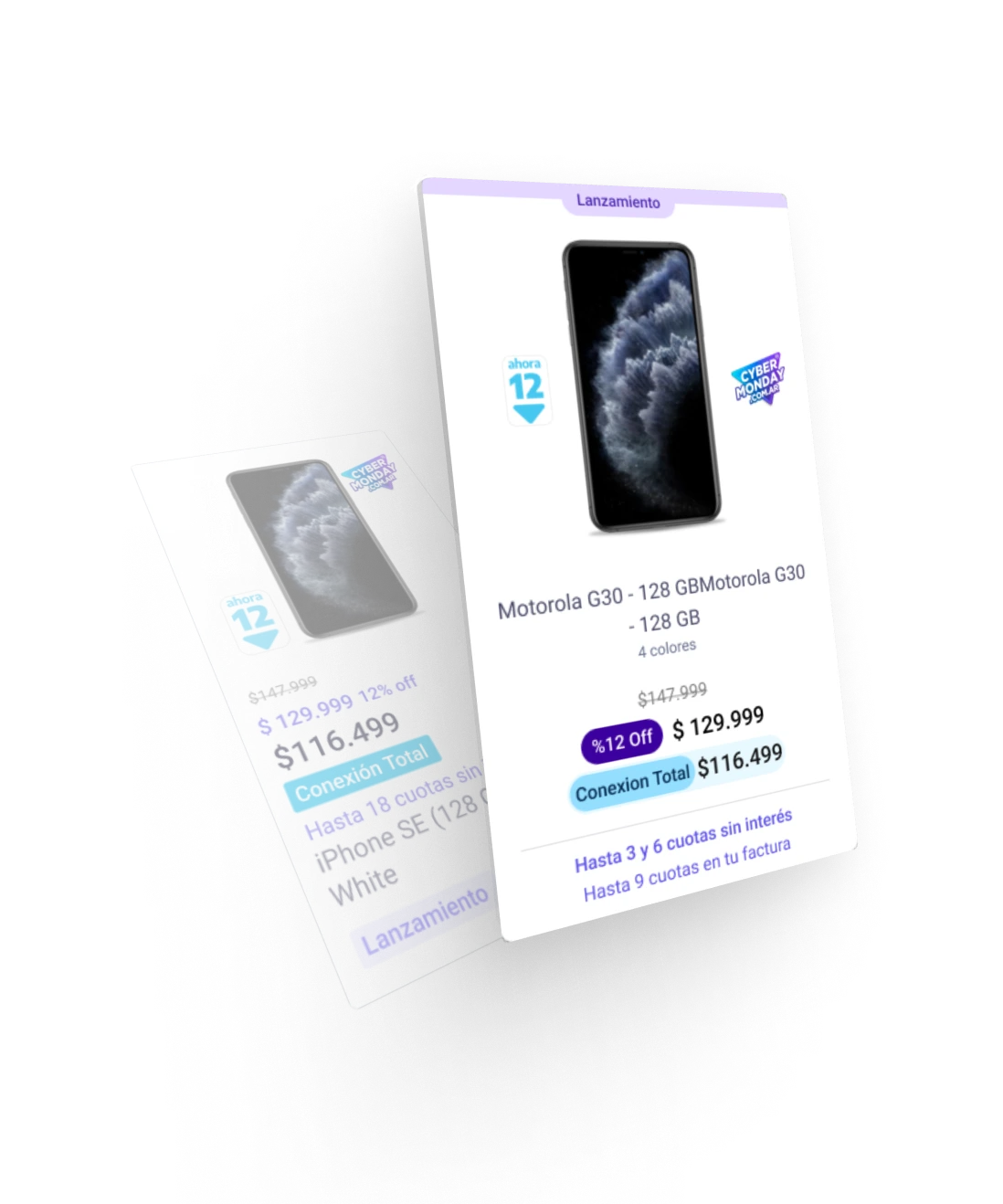
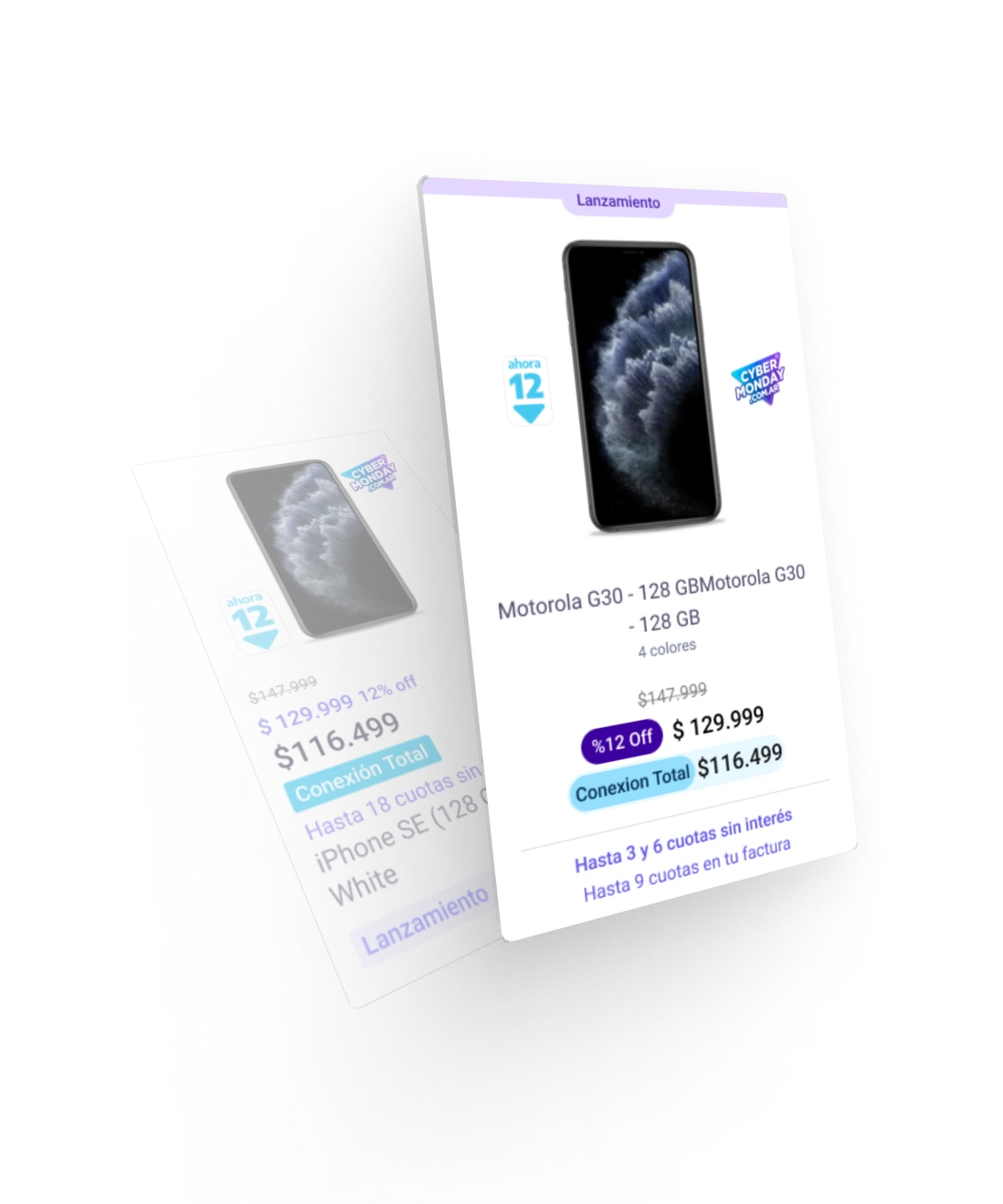
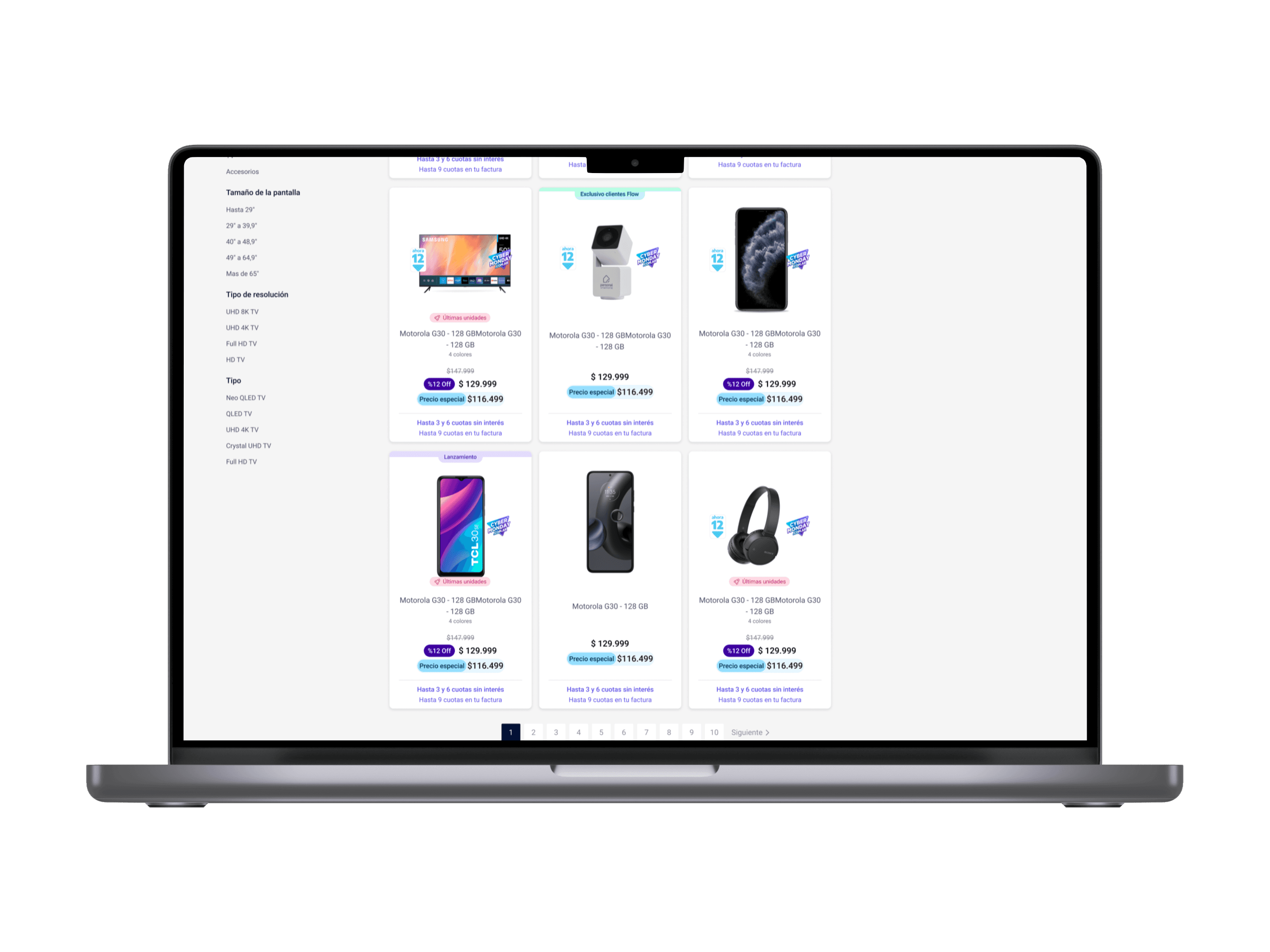
With these initial explorations, and in collaboration with the design team, we decided to test a hypothesis that we formulated based on the designs: "If the Special Price is encapsulated next to the corresponding price, people will understand it as an exclusive price for certain customers".
$147.999
12% Off
$ 129.999
Precio especial
$116.499
We opted for a design similar to the one above for testing, prioritizing user feedback. Using the Maze tool, we tested hypotheses related to the card design with 1,147 users on the E-commerce platform. This involved open-ended questions, a 5-second test, and a choice between two options to measure user perception.
From a product perspective, we not only had to address the issue of the "special price" but also consider potential future functionalities that would be added. With these ideas analyzed and defined, we have to design the final component.

FINAL DESIGN
Slide to see the changes
↓
RESULTS
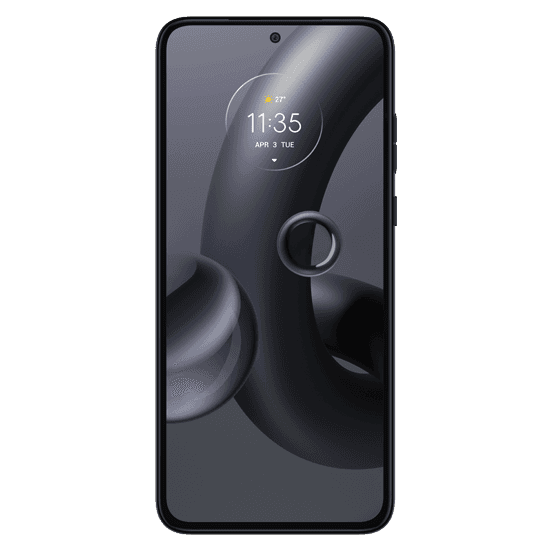
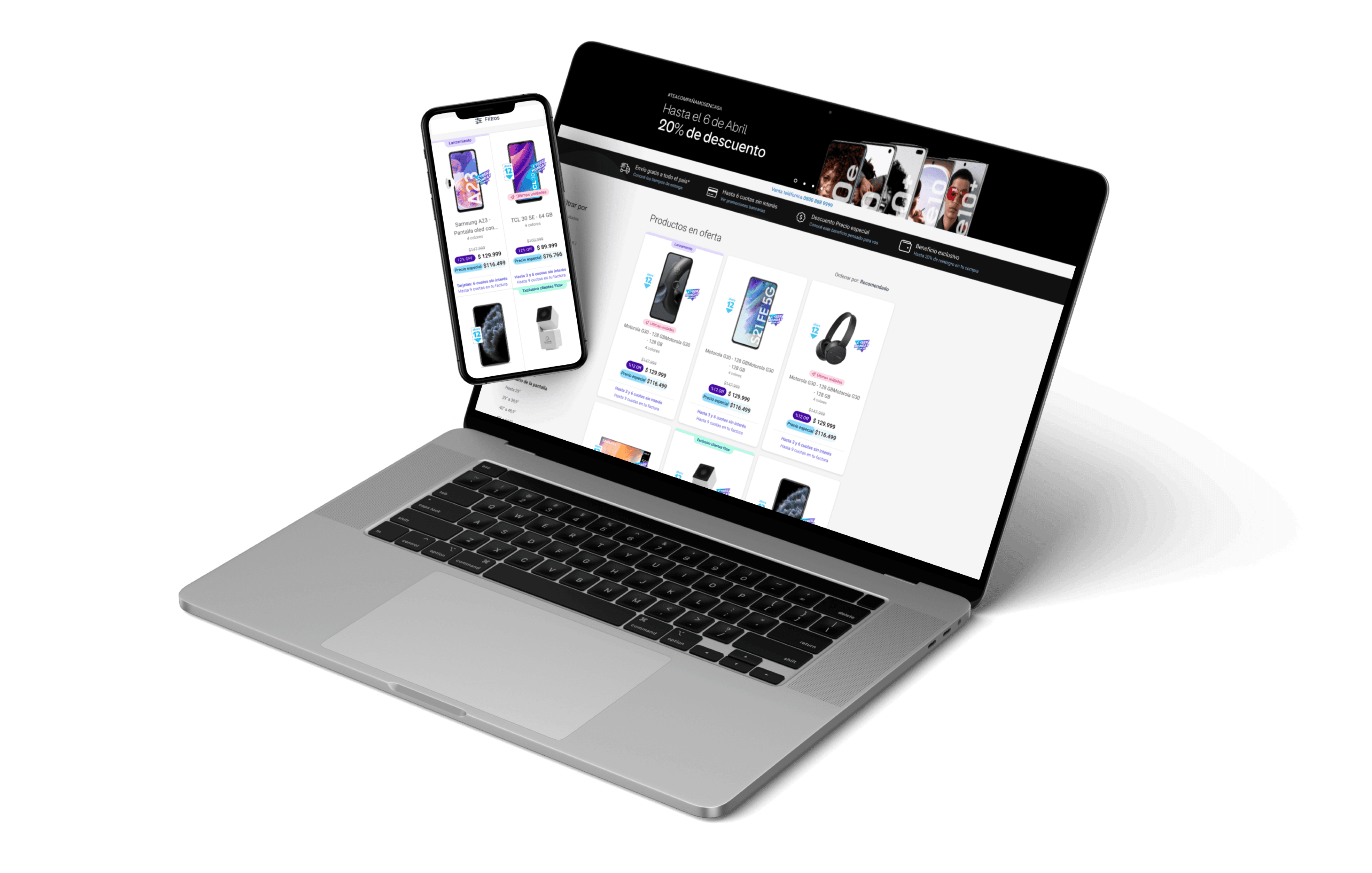
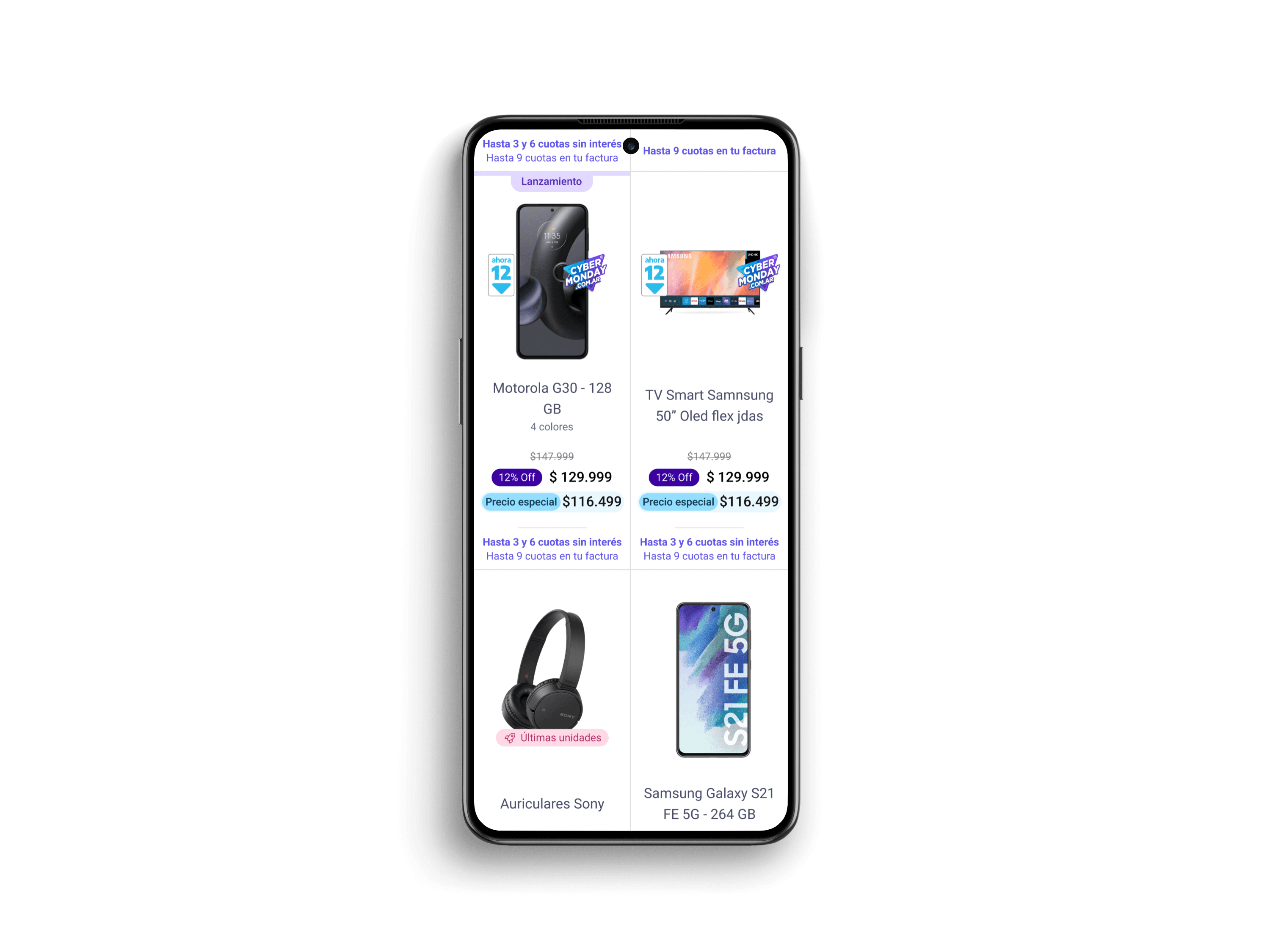
With the new design we achieved a 38% increase in the number of users who accessed the product details directly. While this increase can be attributed to various factors, such as product pricing or better deals compared to competitors, we believe that the new design helped differentiate hierarchies and highlight the benefits the store offered.
One of the primary challenges we faced was understanding the pricing that corresponded to each user. After implementing the cards, we noticed a 12% improvement in usability according to the NPS survey, and we have not received any complaints about incorrect price charges to date.
INCREASE THE STARS
UX DESIGN - 2021
Arise as the necessity to increase and enhance the engagement of individuals in the reviews in the app store.
See other
projects
CARPOOLEAR APP
DISCOVERY - 2022
Research and redesign of the journey creation flow based on user needs for a carpooling app.